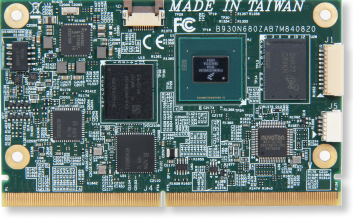
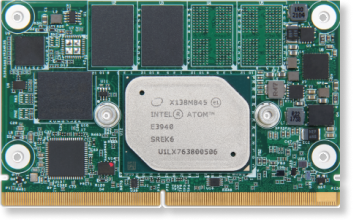
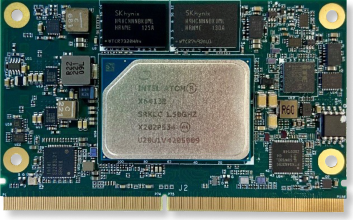
SMARC (Smart Mobility ARChitecture) is a versatile small form factor computer module targeting applications that require low power, low costs, and high performance. It was defined in 2013 by the Standardization Group for Embedded Technologies (SGET).
Low Power</span
High Performance</span
Low Cost</span
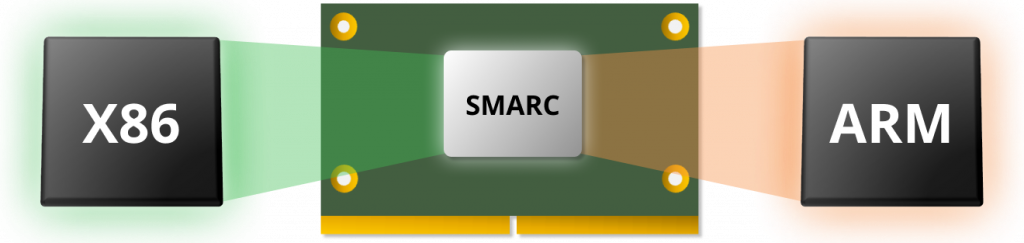
AS one of the SOM (system on module) form factor standard, SMARC module is used in many devices, especially low-power SOCs and CPUs. Compare with the COM Express standard which has been the mainstream of x86 processors in the SOM market, SMARC can not only use X86 but better meet the requirements of ARM system processors. It allows SMARC to be the low-cost entry of computer modules for a greater range of applications.
Two Sizes of SMARC Module
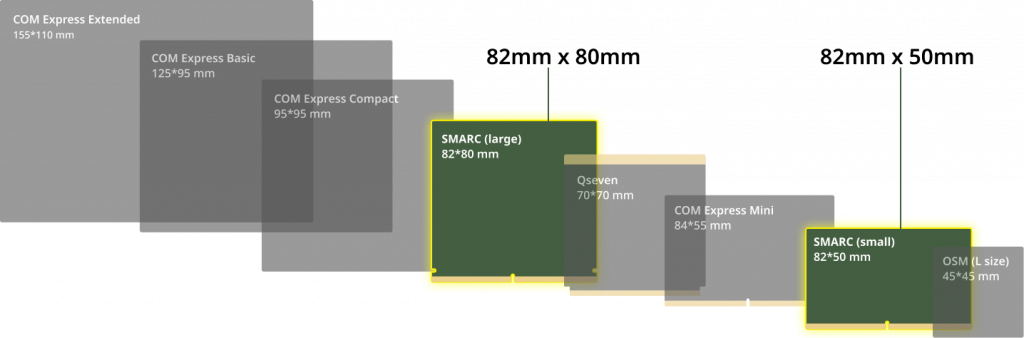
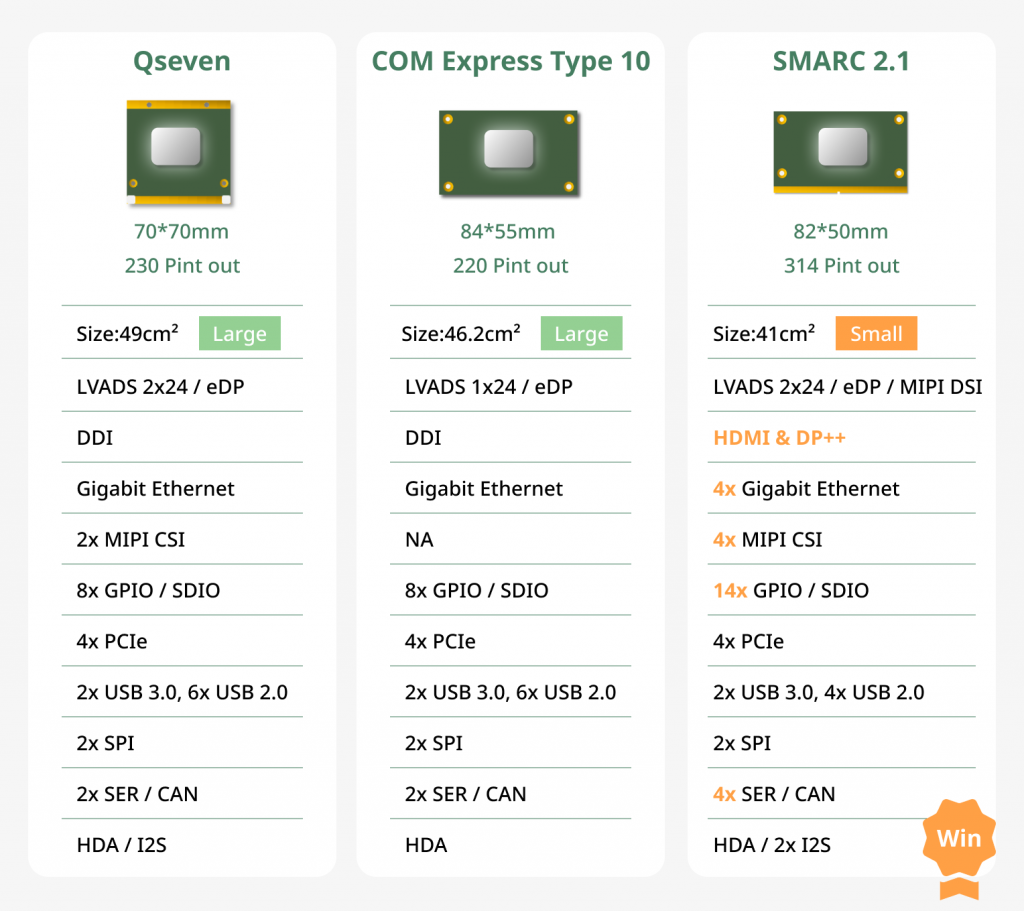
SMARC Module has two sizes of form factor defined as 82mm x 50mm and 82mm x 80mm. Compared to the Qseven standard with size of 70mm x 70mm, SMARC offers more interfaces in a smaller area, and provides more multimedia ports circuit to meet versatile expansion demands.
Low profile
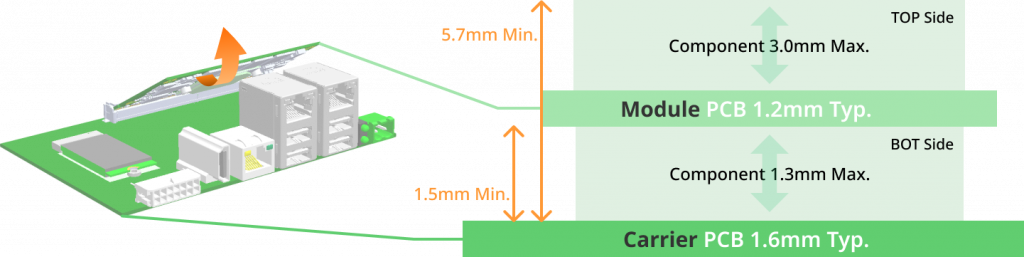
As low as 1.5mm
Carrier Board top to Module bottom
Optional stack height
2.7mm, 5mm, and 8mm
Total assembly height
Carrier Board top to tallest Module component is less than 6mm
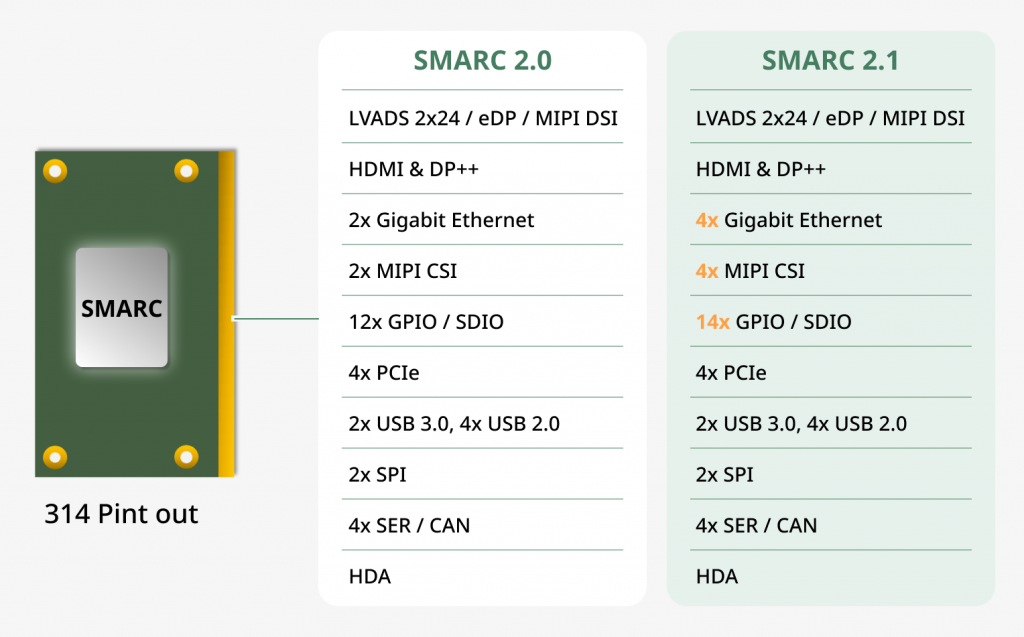
The Comparison of Pin out SMARC2.0 and SMARC2.1
The SMARC Module connector is a low profile, right angle and 314 pins memory – socket style connector, which is commonly used for MXM 3.0 graphics cards. However, the SMARC usage and pin-out definition of this connector are totally different from the usage of graphics cards. The updated specification of SMARC 2.1 supports more options on PCI Express lanes, extra two MIPI CSI interfaces and additional GPIOs. Below is the comparison:
The Pin out comparison of
SMARC 2.1 with COM Express and Qseven
Compared with Qseven, SMARC has better pin definition of display, ethernet ports, and camera interfaces. As to the choice of interfaces, SMARC is the best among the three. Therefore, SMARC allows a wider range of applications with proper pin definition.
Application
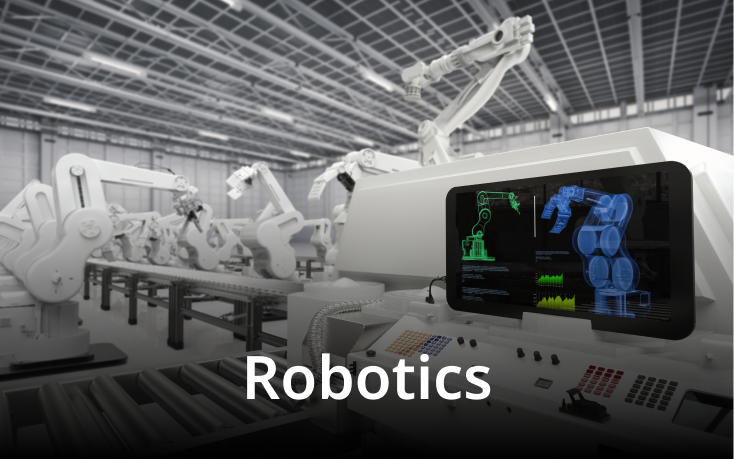
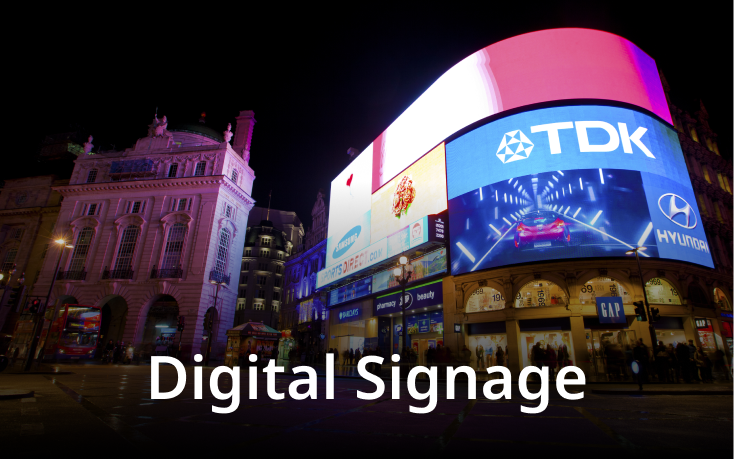
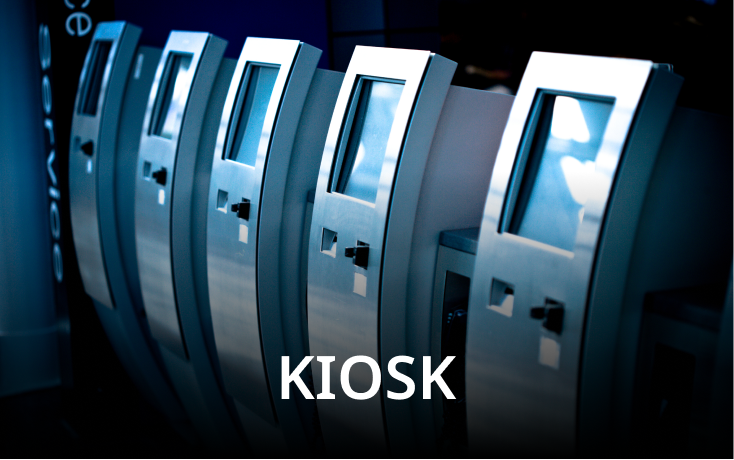
SMARC modules stand out with various options of graphics, camera, sound, network and optional wireless interfaces. It allows SMARC to fit more powerful multimedia applications, such as the digital electronic signage, traffic device HMI, and vending machines.